Introduction
If you’re an IT professional like me—a software engineer, tester, or architect—you probably spend the bulk of your day in front of a screen, seated in a not-so-ergonomic chair, working through back-to-back meetings, sprints, or debugging sessions. It feels routine until the backaches, headaches, eye strain, and stress start creeping in. You think you're alone in this? Not even close.
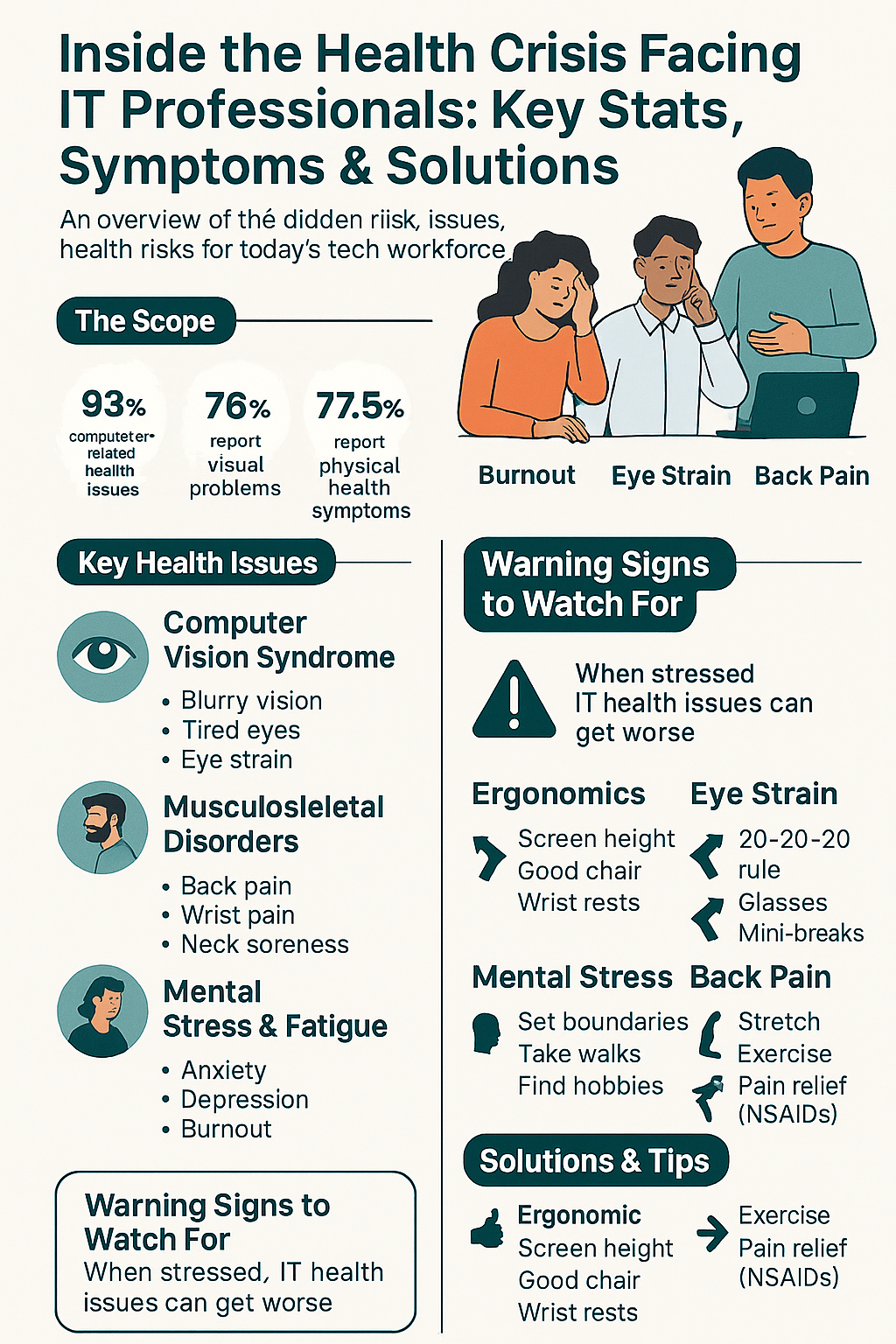
A recent study revealed a staggering 93% of IT professionals suffer from computer-related morbidities. Even more concerning, 76% reported visual problems and 77.5% reported musculoskeletal disorders. This isn’t just a coincidence—it's a health crisis brewing silently behind screens and codebases.
In this in-depth article, we’ll unpack the most prevalent work-related health issues among IT professionals, delve into real-world causes from someone working in the industry, and explore actionable steps you can take today to reclaim your health—without quitting your job.
The Reality of Health Risks in the IT Industry
IT Professionals and the Sedentary Lifestyle
Let’s face it, the average IT job encourages a sedentary lifestyle. We spend 8–12 hours a day in front of monitors, barely moving, often skipping breaks to meet deadlines. This lack of movement has been directly tied to increased risk for non-communicable diseases (NCDs) like diabetes, cardiovascular issues, and obesity.
Sedentary work isn’t just about being inactive—it disrupts your metabolism, slows down digestion, and contributes to long-term chronic pain in software professionals, especially in the lower back and neck.
The Eye-Opening Case of Computer Vision Syndrome
I remember working on a deadline-driven cloud migration project that had me glued to the screen for 14 hours a day. The blurry vision, dry eyes, and burning sensation weren’t from the pressure—it was computer vision syndrome (CVS) in full force.
Visual problems in IT professionals are one of the most underreported but widespread health issues. Symptoms include:
Dry eyes
Blurred vision
Headaches
Eye fatigue
Difficulty focusing
In fact, CVS affects more than 70% of computer users, and in our field, it’s nearly everyone.
Musculoskeletal Disorders (MSDs): The Silent Agony
Ever felt a persistent pain in your wrist, shoulder, or neck after coding all day? Welcome to the world of musculoskeletal disorders in IT workers. These are repetitive strain injuries (RSIs) triggered by poor posture, long hours of mouse use, or typing on unergonomic keyboards.
Common MSDs among IT professionals include:
Carpal Tunnel Syndrome
Tendinitis
Cervical spondylosis
Lower back pain
A well-cited stat: 77.5% of IT professionals experience musculoskeletal issues. And no, these aren’t just temporary discomforts. Left untreated, they can lead to chronic conditions and even disability.
Mental Health in the IT Industry: The Invisible Struggle
Burnout, Anxiety, and Depression in IT Jobs
One of the less visible yet highly damaging health risks in the IT sector is related to mental health. From high-pressure deadlines to unrealistic client expectations and lack of work-life balance, stress in IT professionals has become commonplace.
A typical IT day looks like this:
Multiple project handoffs
Constant context switching
Late-night production issues
Endless Jira tasks
Always being "on-call"
These lead to burnout, anxiety, and even clinical depression, especially when no coping mechanisms are in place. Many suffer in silence, internalizing stress until it manifests physically or emotionally.
Remote Work and Mental Health Challenges
While work-from-home (WFH) has been a boon for flexibility, it’s also blurred boundaries. Mental health challenges for remote IT workers include:
Social isolation
Longer work hours
Lack of routine
Sleep disruption
WFH has also made it harder for managers to spot struggling team members, further intensifying the problem.
Occupational Health Risks in IT: What You Should Know
Occupational Diseases in IT Aren’t Just a Theory
Occupational diseases used to be associated with factory work or mining. But now, with increased screen time, prolonged sitting, and poor ergonomics, the IT workforce faces a new era of occupational health risks.
Here are some rising concerns:
Screen time health effects: Digital eye strain, circadian rhythm disruption, cognitive fatigue.
Job stress IT professionals: Pressure from agile frameworks, product rollouts, and tech debt.
Ergonomic issues IT workplace: Poor workstation setup, non-adjustable chairs, glare-heavy lighting.
Lifestyle diseases in information technology workers: Obesity, hypertension, Type 2 diabetes.
This isn't scaremongering—these are evidence-backed outcomes many of us are already experiencing.
Real-World Symptoms You Shouldn’t Ignore
From personal experience, and talking to peers across QA, DevOps, and Architecture teams, here are symptoms that often go unnoticed:
Chronic wrist or finger pain
Severe eye discomfort post-work
Trouble sleeping (sleep disorders)
Emotional exhaustion or irritability
Persistent neck stiffness
Weight gain despite normal eating
If you’re experiencing two or more of these, it’s time to take your health seriously.
Work-Related Health Problems in IT: Survey Insights
Let’s put numbers to the problem:
93% of IT professionals suffer from computer-related morbidities
76% report visual problems
77.5% report musculoskeletal issues
60% experience mental health symptoms (burnout, anxiety)
85% exceed healthy screen time limits (8+ hrs/day)
The data doesn’t lie. Computer-related morbidity statistics in the IT sector prove that almost every IT worker is at risk.
Common Triggers Behind IT-Related Health Problems
Poor Ergonomics at Work
Whether at home or in the office, ergonomic issues in IT workplaces remain a key factor. Chairs without lumbar support, desks too high or too low, and improper monitor alignment all contribute.
Unregulated Screen Time
The impact of long screen time on IT health includes eye strain, cognitive overload, and reduced productivity. Many professionals exceed 10+ hours of screen time daily, skipping breaks altogether.
Lack of Physical Activity
Sedentary lifestyle IT workers are particularly vulnerable to diseases like:
Deep vein thrombosis (DVT)
Varicose veins
Heart issues
Sitting isn’t just uncomfortable—it’s hazardous.
Lack of Mental Health Support
Many IT firms still don’t have robust occupational health interventions, such as therapy sessions, mindfulness training, or regular health checkups.
Preventive Tips for a Healthier IT Work Life
Ergonomic Tips for IT Professionals
Use a height-adjustable chair with lumbar support
Keep monitor at eye level
Use external keyboards and mice
Follow the 20-20-20 rule for eyes (every 20 mins, look at something 20 feet away for 20 seconds)
Break the Sedentary Cycle
Get up every 30 minutes to stretch
Use a sit-stand desk if possible
Take walking meetings
Join virtual fitness challenges with colleagues
Mental Health Practices
Start your day with 10 minutes of mindfulness or journaling
Block non-urgent notifications
Log off completely after work
Reach out to peer support groups or company counselors
Nutrition and Sleep
Avoid skipping meals due to deadlines
Limit caffeine intake post 5 PM
Set a strict bedtime routine
Use blue-light filters on all screens after sunset
Long-Term Strategies for IT Companies
Occupational Health Interventions for IT Sector
Regular posture assessments
Mandatory screen breaks
Subscription to health & wellness apps
Encourage employees to use vacation days
Creating a Healthy IT Work Environment
Flexible hours and remote-friendly policies
Ergonomics audits
Mental health leave days
Monthly team activities to reduce stress
FAQs
1. Why do IT professionals commonly experience eye strain?
Eye strain in IT workers results from extended screen exposure without breaks, poor lighting, and improper monitor placement—leading to computer vision syndrome.
2. What’s the most common musculoskeletal issue among software engineers?
The most reported issues are lower back pain and wrist pain from prolonged typing and poor posture.
3. Can mental health issues in the IT sector lead to physical symptoms?
Absolutely. Chronic stress can lead to insomnia, digestive issues, fatigue, and increased susceptibility to colds and flu.
4. Are remote IT workers at more risk of health issues?
Yes. While remote work adds flexibility, it increases isolation, screen time, and the tendency to overwork, all of which negatively impact mental and physical health.
5. How can I prevent burnout while working in tech?
Set work boundaries, prioritize tasks, take regular breaks, get enough sleep, and talk to peers or a professional if you feel overwhelmed.
Conclusion
Working in IT is both rewarding and demanding. But the silent toll it takes on our physical and mental well-being is too big to ignore. The numbers don’t lie—visual problems, musculoskeletal disorders, and stress are not exceptions, but the norm in our industry.
But here's the good news: We can change that narrative.
By adopting better ergonomic practices, taking mindful breaks, and advocating for occupational health programs, we can enjoy the perks of working in tech without sacrificing our health. As someone living this life daily, I urge you—prioritize your well-being. Your code will be better for it, and so will your life.