
Table of Contents
- 1 The Biological API: Refactoring Your 2026 Productivity with AI-Linked Bio-sensors and Neurofeedback
- 2 The Hardware Layer: Continuous Bio-monitoring (CGM & Cortisol)
- 3 The OS Layer: Neurofeedback & Cognitive Load Management
- 4 The Software Layer: Deep Work Protocols (NSDR & Sprints)
- 5 The Ergo-Kernel: Optimizing the Physical Interface
- 6 Scaling Your Output: From Generator to Conductor
The Biological API: Refactoring Your 2026 Productivity with AI-Linked Bio-sensors and Neurofeedback
In the high-velocity landscape of 2026, the traditional boundaries between “work” and “wellness” have dissolved. We are no longer merely managing our time; we are managing our neuro-biological bandwidth. As software architects, we understand the concept of technical debt—the cost of choosing a “quick and dirty” solution today that compromises the system tomorrow. But as we move deeper into the decade, a more insidious audit is underway: the accumulation of Physiological Technical Debt.
For years, the senior engineer persona was defined by the “Hero Architect”—a caffeine-powered machine capable of 16-hour sprints, operating in a state of chronic circadian disruption. But this model is failing. The data is clear: the human hardware cannot be infinitely overclocked without catastrophic system failure. In 2026, the elite professional has shifted from being a “keyboard warrior” to a Bio-Linked Conductor, treating their own physiology as a complex API that can be tracked, debugged, and refactored for peak performance.

The Hardware Layer: Continuous Bio-monitoring (CGM & Cortisol)
Until recently, tracking health meant looking at lagging indicators. A yearly blood panel was like checking the logs of a production server after a catastrophic crash. In 2026, we have moved into the era of the Real-Time Hardware Audit.
1. Continuous Glucose Monitoring (CGM) for Cognitive Stability
The “afternoon slump” is not a failure of willpower; it is a memory leak in your metabolic processing. Every time you consume a high-glycemic meal, your system suffers from a massive “glucose spike” followed by a reactive “insulin crash.” During that crash, your brain’s prefrontal cortex—the specialized unit responsible for logical reasoning and architectural planning—is effectively starved of stable energy. In 2026, AI-integrated CGMs provide real-time alerts to your IDE, suggesting a metabolic reset (like a short walk or a specific protein-fat snack) before your cognitive focus degrades.
2. Cortisol Curves and “Processor Heat”
If glucose is the power supply, cortisol is the “processor heat” of the human system. Sustained high cortisol levels (indicative of chronic stress) degrade the “neural cache,” making it exponentially harder to hold complex system states in your mind. 2026 wearable patches now track cortisol fluctuations through sweat analysis, allowing you to monitor your “System Load” in real-time. When the AI detects that your “processor heat” is approaching the red zone, it triggers a mandatory “de-loading” protocol, preventing the neurological burnout that sidelines talented engineers for weeks.
Metabolic health is the foundation of high-output engineering. When blood sugar levels are volatile, your brain fog increases and your focus fluctuates. Optimizing your insulin sensitivity isn’t just about weight loss; it’s about maintaining a stable energy throughput for deep work.
The OS Layer: Neurofeedback & Cognitive Load Management
Once the hardware layer (metabolism) is stabilized, the bottleneck shifts to the Operating System: the brain. In 2026, Neuro-headbands have transcended being “meditation gadgets” and are now essential components of the developer toolchain.
3. Managing “Context-Switching Latency”
In software engineering, “context switching” is the most expensive operation. Re-loading a massive codebase into your mental working memory takes time. Elite performers in 2026 use real-time EEG neurofeedback to measure their “Flow State Latency”—the time it takes to enter deep focus. Tools like the “Brain Song” synchronization use specific auditory frequencies to act as a biological firewall, blocking out distracting digital noise and synchronizing neural firing patterns for rapid problem-solving.
4. AI-Driven Sleep Refactoring: The Nightly Garbage Collection
Sleep is the system’s nightly maintenance cycle and garbage collection phase. During Deep Sleep, the glymphatic system clears beta-amyloid plaques (the equivalent of uncollected heap memory) from the brain. 2026 neuro-tech doesn’t just track hours of sleep; it actively optimizes sleep cycles using transcranial stimulation. By lengthening REM and Deep Sleep phases, you ensure that your cognitive “heap” is 100% clean every morning, eliminating the dreaded “morning brain fog” that plagues lower-tier professionals.
Cognitive fatigue is the primary enemy of the high-level architect. When you lose mental clarity, you make expensive architectural mistakes. Using audio protocols to stimulate mental bandwidth allows you to maintain focus through complex coding sessions without the jittery side effects of caffeine over-stacking.

The Software Layer: Deep Work Protocols (NSDR & Sprints)
Even with high-performance hardware and a optimized OS, poor routine “code” will crash the system. Your daily routine is your software layer. In 2026, the 10-hour “grind” has been officially deprecated in favor of the “Precision Strike” Protocol.
5. The 90-Minute Ultra-Deep Work Sprint
Human biology follows ultradian rhythms. Attempting to maintain high-intensity focus for 4 hours straight is like running a database query with zero indexing; it’s inefficient and slow. The 2026 professional structures their day into three or four 90-minute “Sprints,” followed by a mandatory 20-minute “Recovery Loop.” During these recovery periods, we use Non-Sleep Deep Rest (NSDR) to reset the nervous system, allowing for sustained, high-quality output throughout the entire shift.
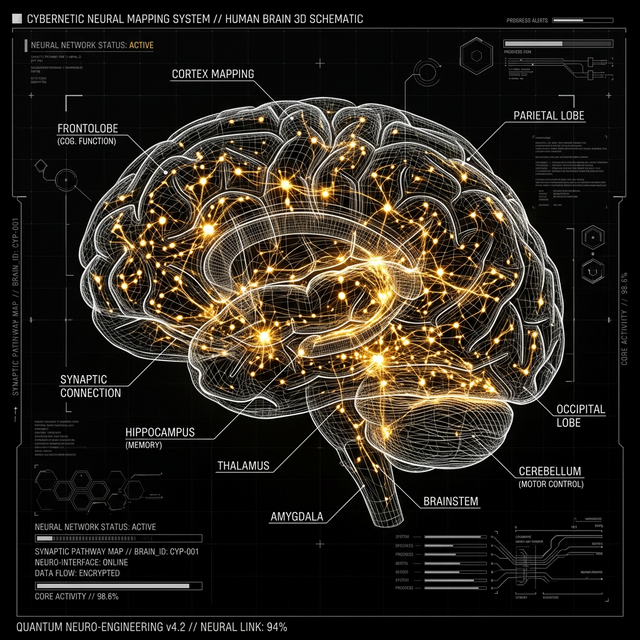
6. Dopamine Management: Protecting the Drive
Dopamine is the neuro-chemical “drive” of the human system. In an era where AI-generated content is designed to hijack your reward pathways, dopamine depletion is a real threat. Constant digital pings “drain the capacitor” of your motivation. The elite dev-protocol in 2026 involves a “Digital Fast” for the first hour of the day—reserving that initial dopamine surge for high-value strategic architecture rather than squandering it on instant notifications.
When you find yourself stuck in a creative block or a constant loop of distraction, it is often a sign that your attention span has been compromised. Re-synchronizing your brain helps you recover from context switching and maintain the mental bandwidth required for deep work.
The Ergo-Kernel: Optimizing the Physical Interface
We cannot ignore the physical interface (your body) through which you interact with the digital world. The **Ergo-Kernel** is the physical hardware abstraction layer.
7. Ocular Health and the BenQ Halo Effect
Digital eye strain is more than just a minor annoyance; it is a precursor to vision fatigue that ruins late-night problem-solving capacity. In 2026, we utilize asymmetric optical lamps and blue-light blocking glasses that target specific nanometers of artificial light. By preventing retinal glare and ocular dehydration, we protect the “user interface” of our biological system.
8. Dynamic Ergonomics: The Sit-Stand Metabolism
The “standing desk” has evolved. We now understand that it’s not about standing all day, but about dynamic variability. Modern desks auto-adjust their height every 20 minutes to prevent metabolic stagnation. By keeping the muscular system engaged, we prevent the “metabolic shutdown” that occurs during long sedentary periods, ensuring that the blood continues to flow to the brain’s decision-making centers.
Sedentary risk is a major factor for spinal compression and lower back pain. Using an ergonomic chair with a pixelated support matrix conforms to micro-movements, improving tissue circulation and preventing the chronic lumbar load that often sideline professional engineers.
Scaling Your Output: From Generator to Conductor
As AI agents handle the “generation” of boilerplate code, the role of the Senior Software Engineer has fundamentally shifted to being a Conductor. This role requires a level of executive function and system-level thinking that is exponentially higher than in previous decades. You are no longer judged by the volume of code you produce, but by the robustness of your architectural decisions and the precision of your system design.
By treating your biology as an API—monitoring the telemetry, following the protocols, and refactoring your daily habits—you transcend the role of a mere “keyboard warrior.” You become a Bio-Linked Architect, capable of massive cognitive output with a system that is resilient to stress and optimized for longevity.
Refactor your life. Debug your sleep. Optimize your metabolism. The future of software engineering is biological.
Medical Disclaimer: The information provided in this article is for educational and informational purposes only and is not intended as medical advice. Always consult with a qualified healthcare professional before making any changes to your health regimen, bio-hacking protocols, or using new wearable devices.