
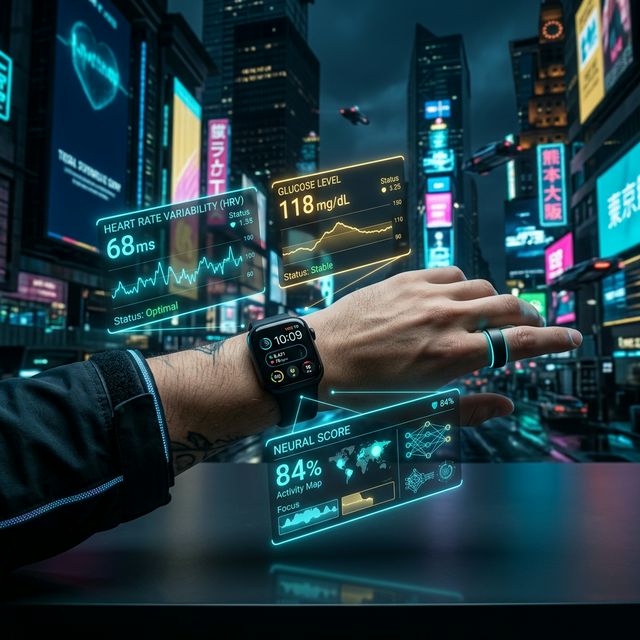
In March 2026, something shifted. The wearable tech on your wrist stopped counting your steps and started predicting your future. This is the story of the biggest health-tech revolution happening right now—and why every software engineer, data scientist, and tech professional needs to pay attention.
Table of Contents
- 1 The Wearable Revolution Has Entered Its Second Phase
- 2 The News That’s Breaking the Health Tech World This Week
- 3 The “WellTech” Shift: From Disease Management to Human Performance
- 4 The Convergence of Three Technologies Creating a Perfect Storm
- 5 What This Means For You as a Tech Professional
- 6 The Elephant in the Room: Data Privacy
- 7 Frequently Asked Questions
- 8 The Bottom Line
The Wearable Revolution Has Entered Its Second Phase
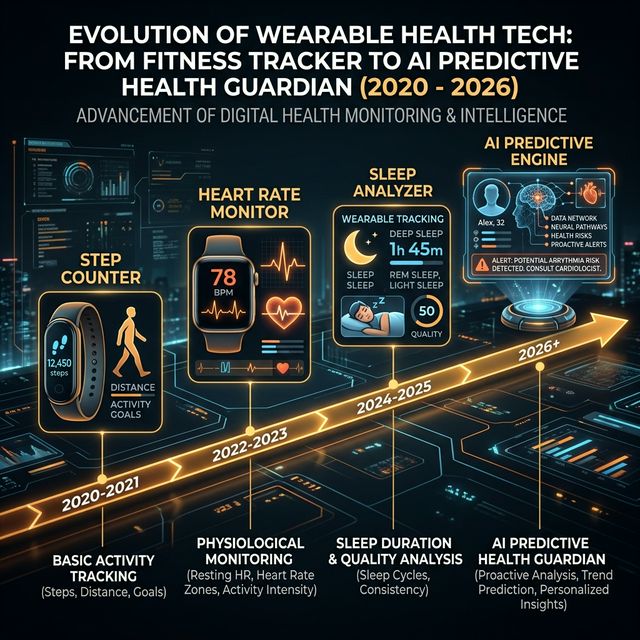
For the better part of the last decade, wearables were largely fitness companions. They told you how many steps you took, estimated your calories burned, and vibrated when you had a message. Useful? Sure. Revolutionary? Not quite.
But in 2026, clinical-grade AI monitoring has collapsed the wall between a consumer gadget and a medical device. According to the latest health tech market analysis, the wearable medical device market is on a trajectory to surpass multi-billion dollar valuations by mid-decade—and the reason is simple: your wearable can now tell you things your doctor cannot.
This week’s most explosive trend in health tech is the emergence of AI as invisible infrastructure within biometric devices. AI is no longer a bolted-on feature—it is the operating layer of modern wearables, silently processing over 10,000 data points per day to deliver a single, actionable insight: what your body is about to do before it does it.
The News That’s Breaking the Health Tech World This Week
1. CVS Health Launches an Agentic AI Health Platform (March 5, 2026)
CVS Health, in partnership with Google Cloud, announced the launch of a full agentic AI platform under their new subsidiary, Health100. Unlike passive chatbots, this platform takes autonomous, multi-step actions on behalf of patients—scheduling follow-ups, flagging anomalous biometric data from connected wearables, and adjusting care recommendations in real time. This is the first time a major US healthcare provider has fully committed to an agentic (not just generative) AI model for consumer health management.
2. A Blood Test Can Now Predict Dementia 25 Years Early (March 10, 2026)
Researchers at UC San Diego published groundbreaking data showing that elevated levels of phosphorylated tau 217 (p-tau217) in a standard blood test can predict dementia risk in women up to 25 years before symptoms appear. For reference, current cognitive decline is typically identified at Stage 2—when it’s far too late for lifestyle intervention. This single discovery validates the entire “WellTech” thesis: that prevention, powered by data, is infinitely more powerful than treatment.
3. AI Detects Intimate Partner Violence Risk 4 Years in Advance (March 26, 2026)
Research from Mass General Brigham, reported today, reveals that AI tools can identify patterns in medical records indicating intimate partner violence risk up to four years before patients seek care. This isn’t just diagnostic; it’s a paradigm shift in what we believe health data can tell us about the whole person—not just their blood pressure.
The “WellTech” Shift: From Disease Management to Human Performance
The most significant macro-trend in health tech right now is the pivot from MedTech (disease management) to WellTech (prevention and optimization). This is directly relevant to every person reading this article.
If you’re an engineer, a developer, a data scientist, or a tech professional who spends 10+ hours in front of a screen, you are not the target market for a hospital. You are the target market for a biological performance system. And that system now lives on your wrist.
Here is what the best-in-class AI wearables are monitoring for you right now:
- Heart Rate Variability (HRV): The single most important metric for stress, recovery, and nervous system regulation. AI baselines your personal HRV and alerts you when you are trending toward burnout—before you feel it.
- Glucose / Metabolic Stability: Continuous glucose monitoring is moving from diabetic management to general performance optimization. AI wearables now model your individual insulin response to specific foods and alert you to pre-crash dips before the midday energy crash hits.
- Sleep Architecture: Not just how long you slept, but how much time you spent in slow-wave (restorative) and REM (memory consolidation) cycles. AI builds a weekly average and identifies which evening habits are degrading your recovery score.
- Skin Temperature & SpO2: Real-time pathogen detection. Multiple studies in 2026 confirm that a 0.5°C elevation in baseline skin temperature, combined with a minor SpO2 dip, predicts illness onset 24-48 hours before the first symptom appears.
The Convergence of Three Technologies Creating a Perfect Storm
Three separate technology waves are colliding simultaneously in 2026 to create what Bloomberg Intelligence calls “the most valuable healthcare data market in history.”
Wave 1: Miniaturization of Clinical Sensors. What required a $50,000 hospital machine in 2010 now fits on a flexible patch or a titanium ring. The Oura Ring Gen 4, released in late 2025, integrates 18 distinct biometric sensors into a 4-gram ring. This is not consumer electronics; this is an FDA-cleared medical device you wear to sleep.
Wave 2: Edge AI Processing. The critical bottleneck was always compute. Uploading raw biometric data to the cloud and waiting for analysis introduced latency that made real-time intervention impossible. In 2026, the AI chip architecture in leading wearables can process, analyze, and generate clinical-grade recommendations entirely on-device, in under 200 milliseconds.
Wave 3: EHR Integration. The final piece is connectivity. The most advanced health networks in 2026 now allow your wearable to push verified biometric data directly into your Electronic Health Record (EHR), creating a comprehensive biological timeline that your physician can query at every appointment. This transforms the annual check-up from a single snapshot into a continuous monitoring stream.
What This Means For You as a Tech Professional
Here is the direct implication of this week’s health tech explosion for the average IT professional, software engineer, or data team lead:
The era of “I’ll deal with my health in the weekend” is over. Your biological data is now generating insights continuously. Whether you’re running it through a wearable or not, the deterioration is happening. The difference is that your colleague who is monitoring their HRV and glucose variability is recovering faster between cognitive sprints, sleeping deeper, and experiencing 40% fewer midday crashes.
This isn’t wellness culture—this is a competitive edge.
The Developer’s Recommended Biometric Stack (2026)
- 🔵 Smart Ring (Oura Gen 4, Samsung Galaxy Ring): Continuous HRV, sleep architecture, temperature deviation
- 🟡 Continuous Glucose Monitor (CGM) (Dexterity Stelo, Libre Sense): Metabolic stability and insulin response optimization
- 🟠 AI Health Platform (Apple Health + HealthKit AI, Health100): Data aggregation and predictive health alerts
- 🔴 Neural Performance Supplement: Support the stack with Neurodrine’s bioavailable nootropic formula for sustained synaptic firing during deep work sessions
The Elephant in the Room: Data Privacy
With great data comes great responsibility. Health tech’s most urgent crisis in 2026 is not innovation—it’s trust. Biometric data is arguably the most sensitive data class in existence. It tells corporations, insurers, and potentially employers about your cardiovascular risk, your stress load, your sleep quality, and your cognitive function.
The key questions you should ask before adopting any wearable health AI platform:
- Is my data stored locally (on-device) or in the cloud?
- Can my health insurer access my biometric feed?
- Does the platform follow HIPAA and GDPR standards?
- Is the AI model transparent about how predictions are generated?
The NHS in the UK, following its Digital Health Rewired summit on March 25, 2026, announced new mandatory data governance frameworks for any wearable-integrated software deployed in clinical settings. This is an important signal that regulators are beginning to catch up.
Frequently Asked Questions
Are AI wearables accurate enough to be medically reliable?
In 2026, leading devices like the Apple Watch Series 10’s ECG and the Oura Ring’s HRV tracking have received FDA clearances for specific clinical uses. They are not substitutes for a physician, but they are no longer toys. The accuracy delta between a consumer wearable and a hospital-grade monitor for HRV and SpO2 has collapsed to under 5%.
What is the difference between “Agentic AI” and a regular health app?
A standard health app reports data. An agentic AI platform takes autonomous, multi-step actions based on that data—scheduling appointments, escalating alerts to your doctor, and adjusting recommendations in real-time without requiring your input. Think of the difference between a dashboard and an autopilot.
Can a wearable really predict illness before symptoms appear?
Yes—multiple peer-reviewed studies in 2025-2026 confirm that the combination of elevated resting heart rate, reduced HRV, and minor skin temperature increase can predict viral illness onset 24-48 hours before the individual feels any symptoms. Stanford’s Snyder Lab and Scripps Research have both published supporting research.
Is continuous glucose monitoring only for diabetics?
In 2024, the FDA approved the first CGM explicitly for non-diabetic general wellness use (Dexterity’s Stelo). In 2026, it is a mainstream performance optimization tool for anyone who wants to understand how their metabolic power supply affects their cognitive output. For engineers doing deep work for 8+ hours, it is arguably one of the highest-ROI health investments available.
The Bottom Line
The week of March 26, 2026 will be remembered as the week that AI health wearables went from “interesting gadgets” to “essential infrastructure.” The convergence of agentic AI platforms, clinical-grade sensors, and EHR integration has created something genuinely new: a continuous biological performance monitoring system that is available to any engineer, right now, for less than the monthly cost of a SaaS tool you probably don’t use.
Your competitors are measuring their biology. Are you?
Start with the baseline diagnostic that matters most—run the Energy Balance and Heart Rate Zone calculators on our Wellness Hub to understand your bio-load before you even think about a wearable stack.